Scout
Scout Finch, the young narrator of Harper Lee's novel, is a precocious, tomboyish girl whose moral education and evolving understanding of justice, empathy, and courage form the heart of the story. Through her first-person perspective, the reader witnesses the complexities of race, class, and family in the Depression-era South.
Identity and Background
Scout, whose full name is Jean Louise Finch, lives in the small, insular town of Maycomb, Alabama, with her father Atticus Finch, her older brother Jem, and their housekeeper Calpurnia. She is a spirited and curious child, often found in overalls, a preference that deeply troubles her Aunt Alexandra, who believes Scout should behave like a proper lady. Scout's mother died when she was very young, and she has few memories of her, though Jem sometimes shares his own. She is a natural reader and thinker, but her early school experience is grim; she finds the second grade tedious and is already disillusioned with formal education. Her father, Atticus, is a lawyer and a widower, and Scout is acutely aware that he is older than the fathers of her schoolmates, which she initially feels reflects poorly on his abilities and manliness. She is also aware that he wears glasses and is nearly blind in his left eye, and she wishes he could do something more admirable, like work in a drugstore or drive a dump-truck.
Life and Plot Trajectory
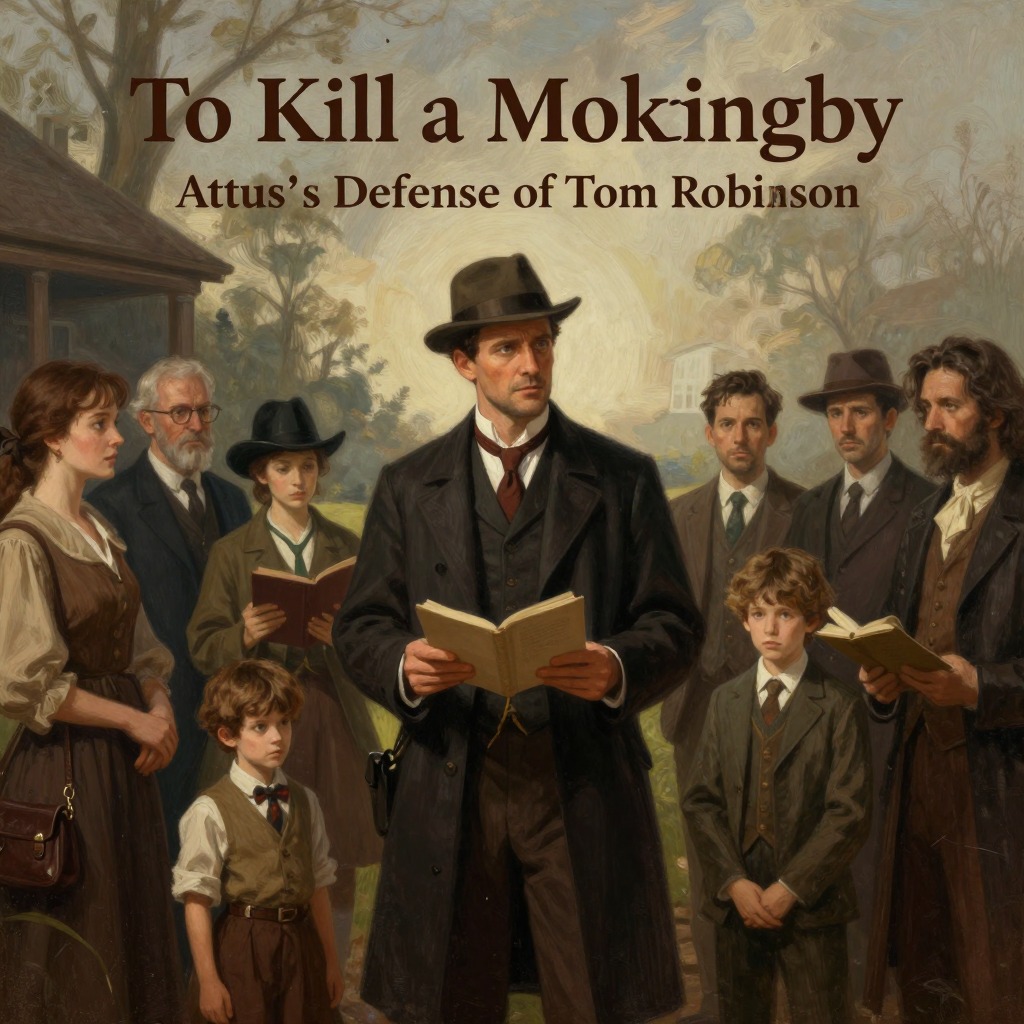
Scout's life is marked by a series of formative events that challenge her childhood innocence. She and Jem discover mysterious gifts left for them in a knot-hole of a tree on the Radley Place, including two soap dolls carved to look like them, a spelling medal, and a broken pocket watch. These gifts, later revealed to be from the reclusive Boo Radley, create a secret bond between the children and their mysterious neighbor. The knot-hole is eventually filled with cement by Mr. Nathan Radley, an act that deeply upsets Jem and signals the end of this secret communication. Scout's world is also shaken by the arrival of a rare snowfall, during which she and Jem build a snowman that is a caricature of their neighbor Mr. Avery, and by the subsequent fire that destroys Miss Maudie Atkinson's house. During the fire, Scout is unknowingly covered with a blanket by Boo Radley, a revelation that terrifies and fascinates her. The most significant event is Atticus's decision to defend Tom Robinson, a Black man accused of raping a white woman. This case exposes Scout to the town's deep-seated racism and forces her to confront the ugliness of prejudice. She is taunted at school by Cecil Jacobs, who says her father defends niggers, and she must learn to control her temper and walk away from fights, a difficult lesson for a girl who is quick to use her fists. At Christmas, she gets into a physical fight with her cousin Francis Hancock after he calls Atticus a nigger-lover, an incident that leads to a spanking from her Uncle Jack Finch and a subsequent conversation where she teaches him about fairness. She also accompanies Calpurnia to First Purchase African M.E. Church, where she witnesses the poverty and faith of the Black community and learns about the concept of "linin'" hymns, as most of the congregation cannot read. The arrival of Aunt Alexandra, who comes to stay with the family to provide a "feminine influence," introduces a new source of tension, as Alexandra tries to instill in Scout the importance of being a "lady" and living up to the Finch family name.
Key Actions and Objectives
Scout's primary objective is to understand the world around her, a world that often seems contradictory and unfair. She is a natural questioner, constantly asking Atticus for explanations about complex issues like race, justice, and morality. She asks him why he defends Tom Robinson, and he explains that he must, or he couldn't hold up his head in town. She asks him what a "nigger-lover" is, and he tells her it's a term used by ignorant, trashy people. She also asks Calpurnia about the nature of Tom Robinson's alleged crime, but is told to ask her father. Her actions are often driven by a fierce loyalty to her family, especially her father. She fights Cecil Jacobs and Francis Hancock to defend Atticus's reputation, even though she knows she is not supposed to fight. She also shows a growing sense of empathy, as when she feels sorry for Mrs. Dubose after Jem destroys her camellias, and when she is puzzled by Miss Maudie's cheerful reaction to losing her house in the fire. She is also a keen observer of social dynamics, noting the hypocrisy and prejudice of the adults around her, and she often acts as a moral compass, pointing out the inconsistencies in their behavior.
Relationships and Conflict
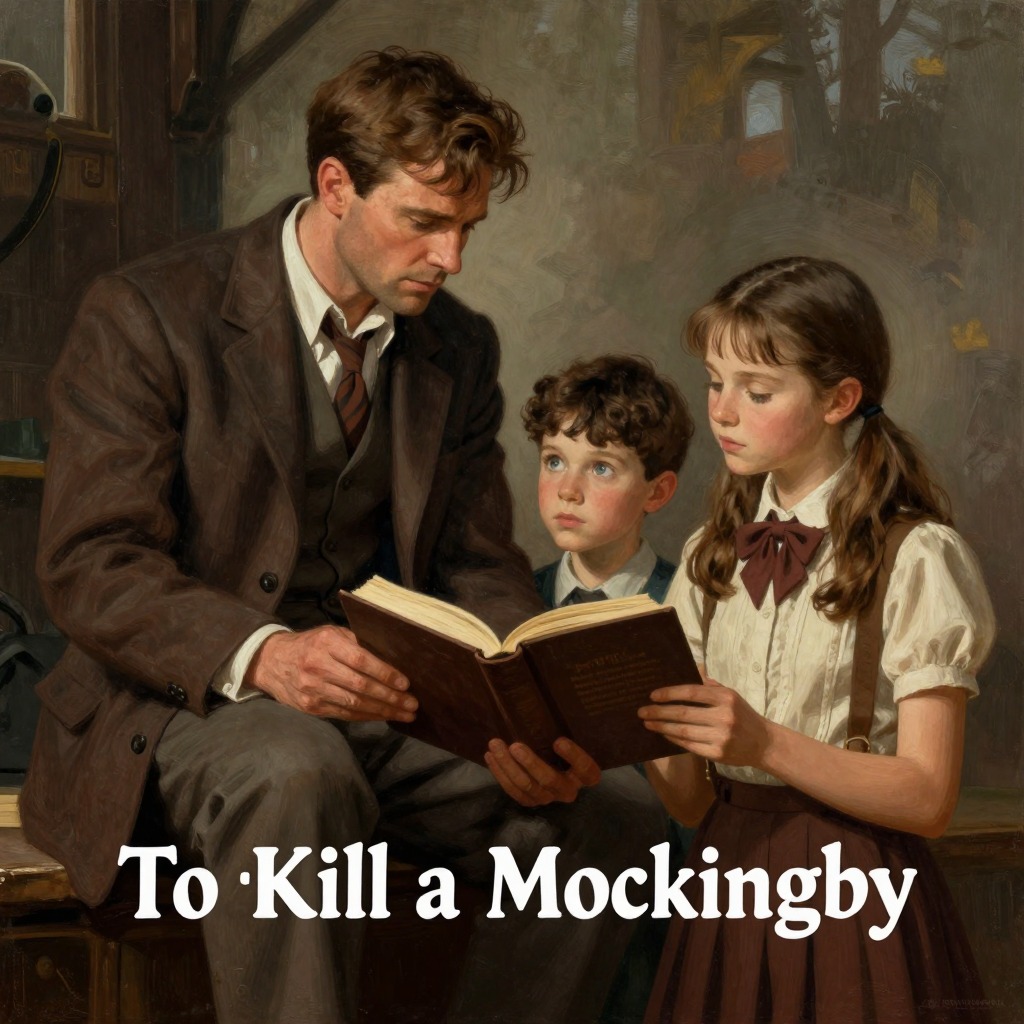
Scout's most important relationship is with her father, Atticus. He is her primary teacher and moral guide, and she trusts him implicitly, even when she doesn't fully understand his decisions. She is also deeply bonded with her brother Jem, though their relationship becomes strained as he enters adolescence and becomes moody and distant. She is close to Calpurnia, who provides a maternal presence and a bridge to the Black community. Her relationship with her Aunt Alexandra is fraught with conflict, as Alexandra disapproves of Scout's tomboyish ways and tries to force her into a conventional feminine role. Scout also has a complex relationship with the town's outcasts. She is initially terrified of Boo Radley, but she comes to see him as a protector after he covers her with a blanket. She is also forced to confront the town's prejudice through her interactions with Mrs. Dubose, a cantankerous old woman who insults Atticus and the children, and with Cecil Jacobs, who taunts her at school. Her friendship with Dill Harris, a boy who visits Maycomb every summer, provides a source of joy and imaginative play, and she is devastated when he writes to say he cannot come one summer because he has a new father.
Change and Ending
Scout undergoes a profound moral and emotional transformation over the course of the novel. She begins as a naive, impulsive child who solves problems with her fists, but she learns to control her temper and to see the world from other people's perspectives. Atticus's lesson that "you never really understand a person until you consider things from his point of view" becomes a guiding principle for her. She learns to recognize courage not just in physical acts, but in the quiet determination of people like Mrs. Dubose, who fights her morphine addiction, and her father, who defends Tom Robinson despite knowing he will lose. By the end of the novel, Scout has developed a more nuanced understanding of justice, empathy, and the complexities of human nature. She is able to stand on the Radley porch and see the world from Boo Radley's perspective, finally understanding the gifts he left for her and Jem. She has learned that courage is not a man with a gun, but knowing you're licked before you begin and beginning anyway. She has also learned to navigate the treacherous waters of Maycomb's social codes, even as she maintains her own sense of right and wrong.
Narrative Role and Evaluation
Scout is the first-person narrator of the novel, and her voice is one of the most distinctive and celebrated in American literature. Her perspective is both innocent and insightful, allowing the reader to see the events of the story with fresh eyes while also understanding the deeper moral implications. Her naivete often highlights the absurdity and cruelty of adult prejudices, and her growth provides the novel's central arc. She is a round character, capable of surprising the reader with her depth of understanding and her capacity for empathy. Her narrative voice, which combines the language of a child with the wisdom of an adult looking back, creates a powerful and enduring portrait of a young girl coming of age in a deeply flawed society. She is the hero of her own journey, and her story is a testament to the power of empathy, integrity, and the courage to stand up for what is right, even when it is unpopular.